
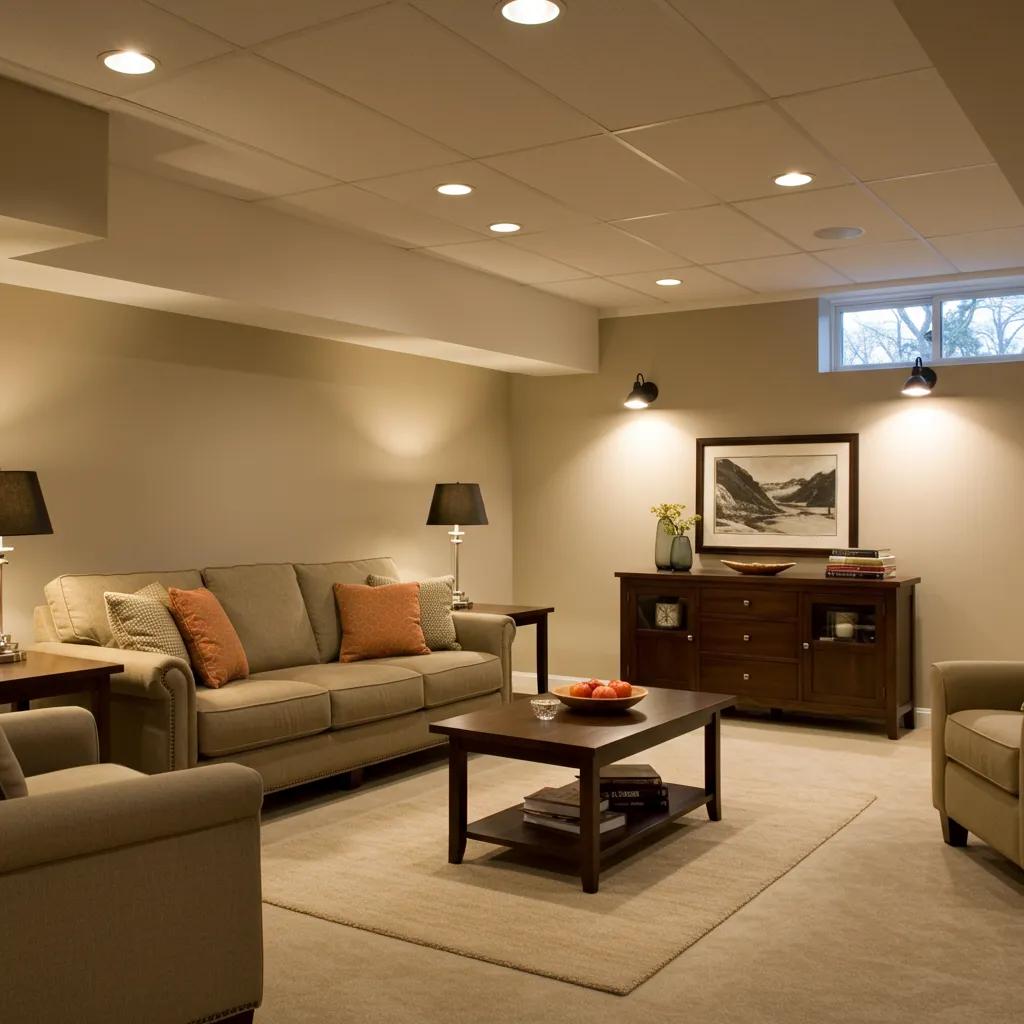
Top Basement Lighting Ideas for Utah County Homes
Basement lighting transforms dark, underused spaces into safe, comfortable, and valuable living areas for Utah County homeowners, and careful lighting design matters more in lower-level rooms than any other part of the house. This article explains practical lighting strategies—from recessed LED layouts to layered ambient, task, and accent systems—so you can plan upgrades that brighten low ceilings, improve functionality, and reduce energy bills in Spanish Fork and across Utah County. Many homeowners wrestle with low headroom, minimal natural light, and the need for dimmable zones for media or work; this guide shows how to address those constraints with fixture choices, spacing rules, color temperature guidance, and smart controls. Read on for zone-by-zone fixture recommendations, quick comparison tables for common basement uses, step-by-step design tips for low or windowless basements, and a simple checklist of code and energy considerations to bring your plan to execution. After the practical advice sections you’ll find a brief note on how Lynnwood Construction in Spanish Fork supports homeowners with basement finishing and lighting installation, including clear pricing practices and local project experience to help you get a transparent quote.
What Are the Best Basement Lighting Solutions for Utah County Homes?
The best basement lighting solutions combine recessed LED fixtures, layered lighting zones, and smart controls to deliver even brightness, flexible scenes, and energy savings in low-ceiling Utah basements. Recessed LED modules offer low-profile illumination that preserves headroom while providing even ambient light, while LED strip or cove lighting adds indirect glow that reduces contrast and perceived height issues. Layered lighting—ambient, task, and accent—lets you tune light levels for watching movies, working at a desk, or entertaining, and smart dimming controls make those transitions simple and efficient. Below is a quick list of primary solutions and why they work in local basements.
This section lists top solutions to consider for Utah County basements:
- Recessed LED fixtures: Low-profile, even ambient lighting for low ceilings.
- Layered lighting zones: Combine ambient, task, and accent to fit multiple uses.
- Smart dimmers and scene controls: Energy savings and convenient scene setting.
- LED strip and cove lighting: Indirect glow to reduce visual depth and soften edges.
These options balance height constraints and energy goals, then transition into specific fixture types that work best in Utah basements.
Which Lighting Types Work Best for Utah Basements?
Recessed lighting, flush-mount fixtures, wall sconces, pendants, and LED strip lighting each have ideal use cases in basements depending on ceiling height and room function. Recessed LED modules are the go-to for low ceilings because they sit flush and distribute light evenly, reducing shadows in traffic areas and workspaces. Flush-mount fixtures can be used where a small decorative element is desired without sacrificing headroom, while wall sconces and LED strips enhance accent lighting and add depth in hallways or behind shelving. Choosing fixtures rated for damp or enclosed spaces and selecting high-CRI LEDs will maintain color accuracy for finishes and art.
How Does Layered Lighting Improve Basement Functionality?
Layered lighting uses ambient, task, and accent sources to create flexible, multi-use basement spaces that adapt to changing activities and moods. Ambient light provides general illumination through recessed fixtures or ceiling-mounted fixtures, task lighting focuses on work surfaces with under-cabinet lights or adjustable track heads, and accent lighting highlights architectural details or shelving with strips or small spots. This arrangement reduces eye strain, prevents harsh contrasts, and allows targeted control where needed, such as bright task zones for crafts and softer ambient levels for relaxation. Effective layering also simplifies wiring and zoning, which leads to easier installation and better long-term energy management.
What Are Energy-Efficient Lighting Options for Basements in Utah?
Energy efficiency in basements centers on LED technology, dimmable drivers, and smart scheduling to cut consumption while maintaining comfort and brightness. High-efficacy LED modules and integrated fixtures deliver the same lumens as legacy lamps with a fraction of the energy, and pairing those fixtures with dimmers or occupancy sensors reduces run-time in infrequently used areas. Smart controls allow scenes and schedules that mimic natural cycles or turn off zones automatically, lowering utility bills during shoulder seasons in Utah County. Considering rebates from local utilities can further offset upgrade costs and improve return on investment for LED retrofits.
LED Lighting Retrofit: Energy Savings and Occupant Satisfaction
The project results showed 69% lighting energy savings and 70% peak demand savings. Light levels were brought into closer agreement with UFC recommendations. Occupant, installer and facility staff satisfaction with the system was high. The main barrier to further adoption is the relatively high cost and associated economics (~20 year payback). However, a trend in decreasing system costs will help.
LED fixtures and Integrated Controls for Advanced Holistic Lighting Solutions, 2020
How Can You Design Basement Lighting for Low Ceilings and Dark Spaces?
Designing for low ceilings and windowless basements requires low-profile fixtures, careful spacing, and reflective surfaces to increase perceived height and brightness. Choosing wide-beam, shallow-profile recessed fixtures keeps light spread even without visually lowering the ceiling, while light-colored paint and reflective finishes bounce light to reduce contrast. Plan fixture spacing based on lumen output and beam angle rather than fixed counts to avoid hot spots and shadows, and use multiple zones so you can brighten specific areas without over-illuminating the entire room. The following numbered steps make this approach actionable.
Follow these practical steps to maximize height and brightness in tight basements:
- Select low-profile or shallow recessed LEDs to preserve headroom and deliver broad light distribution.
- Use wide beam angles and shorter spacing to achieve even illumination without intense hotspots.
- Add indirect cove or strip lighting along walls or shelving to visually lift the ceiling plane.
- Choose neutral to warm color temperatures and high CRI for natural-looking finishes.
Applying these steps improves perceived space and transitions into smart lighting strategies for windowless rooms.
What Are Smart Lighting Solutions for Basements Without Windows?
Smart lighting systems bring scene control, tunable color temperature, and automation that help windowless basements feel more natural and functional. Scene-capable smart switches or bulbs let you program bright daytime scenes for productivity and warmer, dimmer scenes for evenings, while tunable white fixtures can shift from cooler to warmer Kelvin values on a schedule to mimic daylight rhythms. Zoning controllers and wireless wall panels simplify retrofits by limiting new wiring, and integrations with voice assistants or apps provide easy adjustments for media nights or cleaning tasks. Consider grouping fixtures by task area—home office, media, and kitchenette—so scenes activate only the needed circuits.
How to Maximize Height and Brightness with Recessed and Flush-Mount Fixtures?
Maximizing perceived height combines trim choices, spacing rules of thumb, and strategic use of reflectors to spread light upward and outward. Use recessed trims with wider reflectors and shallow baffles to reduce glare, and place fixtures closer to walls to wash vertical surfaces that visually raise ceilings. A common layout rule of thumb is spacing recessed fixtures roughly equal to half the ceiling height for even coverage, but adjust spacing for beam angle and lumens rather than rigid formulas. Flush-mount fixtures suit very low clearances where even a shallow profile is needed, and combining these with accent wall lighting maintains functional balance.
Which Basement Lighting Fixtures Are Ideal for Different Basement Zones?
Different basement zones—home theater, office, guest bedrooms, and bars—require distinct fixture types and control strategies to meet their unique needs. Home theaters prioritize low-glare, dimmable indirect lighting and step lights, while offices demand high-CRI task sources and adjustable spots. Guest bedrooms benefit from layered warm lighting with bedside controls and soft accents, and bars or game rooms can use colorful LED accents, dimming, and localized task lights to support social activities. The comparison table below helps map common fixtures to zones and considerations.
Below is a fixture comparison for common basement zones:
| Fixture | Best For (Zone) | Benefits | Typical Consideration |
|---|---|---|---|
| Recessed LED | General ambient, office areas | Even light, low profile | Choose wide beam angles for even spread |
| Wall Sconce | Hallways, media bias lighting | Accent and indirect glow | Mount height affects wash and glare |
| LED Strip/Cove | Shelving, bars, cove lighting | Indirect ambiance, color effects | Requires driver and proper diffusers |
This table clarifies quick choices and leads into individual zone guidance for practical plans.
How to Light a Home Theater or Media Room in Your Basement?
Home theater lighting focuses on low-glare, dimmable indirect lighting with separate control zones for pre-show, viewing, and intermission scenes. Use wall sconces with dimming for bias lighting, cove or indirect strip lights behind screens to reduce eye strain, and step or pathway lights for safe navigation during shows. Avoid bright overhead direct light that produces screen reflections; instead, design layered circuits so each scene can be dimmed to precise lumen levels. Acoustic considerations and blackout treatments complement lighting choices to preserve picture quality and comfort.
What Lighting Works Best for Basement Home Offices and Craft Rooms?
Basement home offices and craft rooms need bright, high-CRI task lighting with directional control for detailed work and adjustable ambient light for overall comfort. Specify fixtures that meet lumen targets for work surfaces, pair overhead ambient LEDs with adjustable task lamps or track heads, and prioritize CRI 90+ options where color matching and accuracy matter. Dimmable controls let you reduce glare on screens, and localized switching makes it simple to light just the work area without wasting energy on the entire basement.
How to Create Ambiance in Guest Bedrooms and Living Areas?
Guest bedrooms and living spaces favor warm color temperatures and layered dimming to create restful, inviting environments that feel like an above-grade room. Combine warm ambient LEDs with bedside reading lamps and subtle accent lighting to highlight art or architectural features, and include easily reachable controls for guests to set preferred levels. Use 2700K–3000K for bedroom warmth and choose soft diffusers to avoid harsh shadows, which supports comfortable sleep and relaxed socializing. These design choices naturally flow into the broader planning checklist for safety and codes.
What Should Utah County Homeowners Consider When Planning Basement Lighting?
Homeowners should weigh color temperature, lumen targets, dimming and control systems, energy efficiency, and local code or egress requirements when planning basement lighting improvements. Color temperature influences mood—warm for sleeping areas, neutral for work—and CRI affects how colors render on surfaces and fabrics. Proper lumen targets and fixture placement prevent under- or over-lighting, and dimming plus smart controls reduce energy use and increase flexibility. Safety and code compliance, including suitable fixtures for damp locations and correct placement near egress windows, are essential and often require professional review.
Below is a quick-spec table summarizing key planning attributes:
| Attribute | Recommended Range/Option | Why it Matters |
|---|---|---|
| Color Temperature | 2700K–3000K (bedrooms), 3000K–4000K (workspaces) | Sets mood and task clarity |
| CRI | 80+ for general, 90+ for detailed tasks | Ensures accurate color rendering |
| Lumen Targets | 300–500 lm per recessed in ambient; 500+ for task lighting | Prevents under-lighting in low ceilings |
| Dimming/Controls | Dimmable drivers and zoned smart switches | Energy savings and scene flexibility |
This table provides a compact spec checklist, and the next paragraph explains the value of professional installation.
How Does Color Temperature Affect Basement Lighting Mood and Comfort?
Color temperature determines perceived warmth and suitability for different activities: warm whites (2700K–3000K) are calming for bedrooms and lounges, while neutral whites (3000K–4000K) enhance focus in offices and workshops. Higher-CRI LEDs maintain accurate color rendition for finishes and fabrics, which matters in craft rooms and kitchens. Tunable white fixtures give flexibility to adjust temperature by activity and time of day, supporting circadian comfort in windowless basements. Choosing the right balance between Kelvin and CRI improves both aesthetics and functionality.
Why Is Professional Installation Important for Basement Lighting Projects?
Professional installation ensures safety, code compliance, correct circuit sizing, and optimal fixture placement to avoid overheating or insufficient load capacity on existing circuits. Licensed installers help navigate local Utah County requirements, secure permits if needed, and design zoning for scenes and dimmers so controls work reliably. Professionals also mitigate retrofit pitfalls like incompatible dimmers, poor junction box placement, or insufficient ventilation for enclosed LED fixtures. For homeowners aiming for efficient, long-lasting results, professional help reduces rework and improves final outcomes.
How Can Lynnwood Construction Help You Transform Your Utah County Basement with Lighting?
Lynnwood Construction, based in Spanish Fork, Utah County, offers basement finishing and remodeling services that include lighting planning and professional installation to ensure safe, code-compliant, and attractive results. Their local expertise in basement finishing and remodeling means they can coordinate fixture selection, zoning, and wiring alongside finishes to deliver timely projects with transparent pricing and clear communication. Lynnwood Construction emphasizes upfront pricing transparency, timely completion, expert craftsmanship, and guaranteed satisfaction—attributes that help homeowners move from planning to execution with confidence. If you prefer a local contractor familiar with Utah County conditions and permitting, Lynnwood Construction provides local project experience and a straightforward path to a detailed quote.
What Are Recent Basement Lighting Projects Completed by Lynnwood Construction?
Lynnwood Construction has completed local basement finishing projects in Utah County that combined recessed LED layouts, layered task and accent lighting, and smart dimming controls to convert dark basements into livable family rooms and home offices. In these projects, designers prioritized low-profile recessed fixtures for headroom, added cove LED strips for ambient warmth, and implemented zoned dimmers to match activity needs. Homeowners reported improved functionality, better energy performance, and more usable living space after upgrades, demonstrating how coordinated lighting and finishing work together to elevate basement value.
How to Get a Transparent Quote for Basement Lighting Installation in Utah County?
When requesting a quote, prepare photos or basic measurements of your basement, note desired zones and special requirements (home theater, office, egress windows), and list any fixture preferences or smart-control needs to help contractors provide accurate estimates. A transparent quote should include labor, fixture allowances, permit costs (if applicable), and a clear timeline for completion so you can compare options fairly. Lynnwood Construction’s process emphasizes clear communication and upfront pricing so homeowners understand scope, costs, and next steps before work begins.
Frequently Asked Questions
What are the benefits of using smart lighting in basements?
Smart lighting in basements offers numerous advantages, including enhanced convenience, energy efficiency, and customizable ambiance. Homeowners can control lighting remotely via apps or voice assistants, allowing for easy adjustments based on activities or time of day. Smart systems can also include features like scheduling and occupancy sensors, which help reduce energy consumption by automatically turning lights off when not in use. This technology not only improves the functionality of basement spaces but also contributes to lower utility bills and a more comfortable living environment.
How can I choose the right color temperature for my basement lighting?
Choosing the right color temperature for basement lighting depends on the intended use of the space. For areas like home theaters or guest bedrooms, warmer tones (2700K–3000K) create a cozy and inviting atmosphere. In contrast, workspaces such as home offices or craft rooms benefit from neutral to cool tones (3000K–4000K) that enhance focus and visibility. Consider the activities that will take place in each zone and select fixtures that allow for tunable color temperatures to adapt to different needs throughout the day.
What are some common mistakes to avoid when planning basement lighting?
Common mistakes in basement lighting planning include inadequate lumen levels, poor fixture placement, and neglecting to consider the room’s function. Under-lighting can lead to dark, uninviting spaces, while over-lighting can create glare and discomfort. Additionally, failing to layer lighting types—ambient, task, and accent—can result in a lack of versatility. It’s also crucial to ensure compliance with local codes and safety standards, particularly in areas prone to moisture. Taking the time to plan thoughtfully can prevent costly adjustments later on.
How can I improve the energy efficiency of my basement lighting?
Improving energy efficiency in basement lighting can be achieved through several strategies. First, opt for LED fixtures, which consume significantly less energy than traditional bulbs while providing the same brightness. Incorporating dimmers and smart controls allows for better management of light levels, reducing energy use when full brightness isn’t necessary. Additionally, using occupancy sensors can automatically turn off lights in unoccupied areas. Finally, consider the layout and spacing of fixtures to ensure even illumination without excessive energy consumption.
What should I consider when selecting fixtures for different basement zones?
When selecting fixtures for different basement zones, consider the specific functions and ambiance required for each area. For example, home theaters benefit from low-glare, dimmable lighting, while home offices require bright, high-CRI task lighting for clarity. Guest bedrooms should have warm, inviting lighting with easy-to-reach controls. Additionally, think about the ceiling height and available space; recessed fixtures work well in low ceilings, while wall sconces can add character without taking up floor space. Tailoring your choices to each zone enhances both functionality and aesthetics.
How can I ensure my basement lighting meets local building codes?
To ensure your basement lighting meets local building codes, start by researching the specific regulations in your area, particularly regarding egress requirements and fixture ratings for damp locations. Consulting with a licensed electrician or contractor familiar with local codes can provide valuable insights and help navigate any necessary permits. Additionally, consider using fixtures that are specifically designed for basement environments, as they often comply with safety standards. Proper planning and professional guidance will help ensure your lighting installation is both safe and compliant.
Conclusion
Transforming your basement with effective lighting solutions not only enhances the aesthetic appeal but also improves functionality and energy efficiency. By implementing layered lighting strategies and smart controls, Utah County homeowners can create versatile spaces that cater to various activities while maximizing comfort. For a seamless and professional installation experience, consider partnering with Lynnwood Construction, who can guide you through every step of the process. Explore our services today to elevate your basement into a welcoming and well-lit environment.